

Yes, scrolling moves the content. As if it’s being gripped by the bottom of the wheel I’m rotating with my finger from the top.
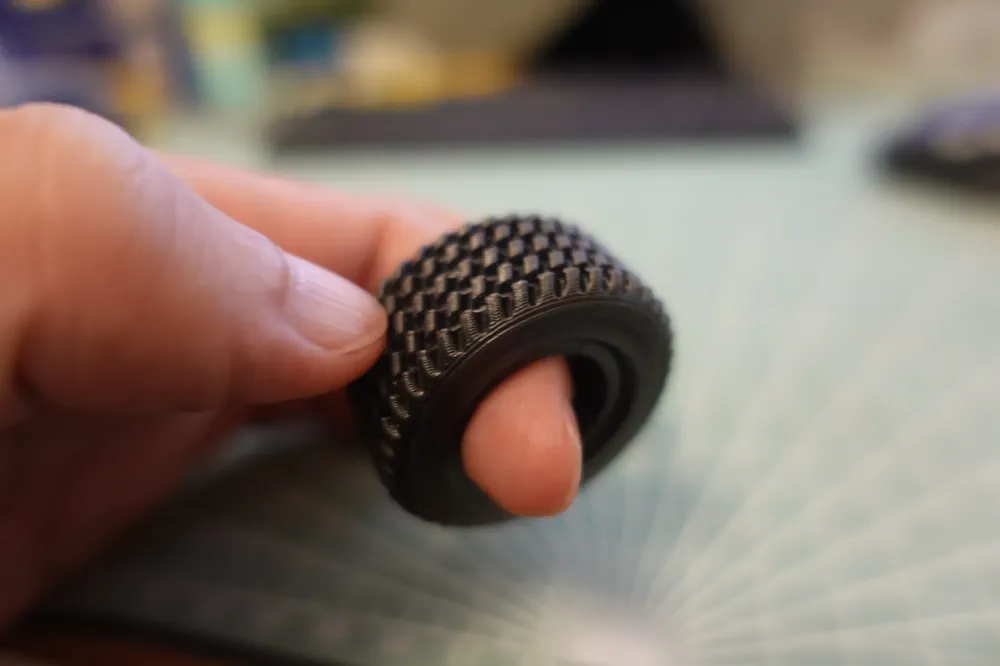
Imagine a toy monster truck on a sheet of paper. Push the wheels forward, page moves backward.
Inverse scrolling is like a high-heeled rubber shoe attached to the tip of my finger advancing the page. There’s some logic to it but that’s not what a wheel is like unless it’s an Apple mouse’s touch wheel. But they can’t be trusted to design a mouse: one had a circular cross-section, another charged from the bottom.
The big question is: which is natural? Fortunately, mice exist in nature so there’s a way to find out. Hold one tightly like this, release the front hand… Which way will the cloth move?

Ah, I see the problem. You’re using a rat, not a mouse.
Good computer mice are rat-sized and feel like a toy car when gripped. Not a puck. Anyway, I couldn’t find a suitable image featuring a mouse.
In ancient times when planes had a simple stick for controls, you pull back to go up and push forward to go down.
You still do, though?
deleted by creator
If you scroll UK, should the scrollbar go up? Or should the page go up?
If you scroll UK they end up near Iceland
Do you still have to drive on the left when driving the UK, or do nautical regulations override that?
I have long preferred “natural” (“Inverted” in KDE) for touchpads, and the opposite for mouse scroll wheels. Until reading this thread, I don’t think I’ve thought about it that much.
I just experimented with switching, and I dunno… I might try using inverted for both for a while. They both feel fine for me after a few seconds of orientation.
The last time I was thinking that way was when I was 5 years or so old and first introduced to a mouse and playing around on the “die Sendungen mit der Maus” Website. Im not using Windows that intensive anymore, is that fucking real?